
This official NPHCE source explains the integrated preventive, promotive, curative, and rehabilitative service model used as implementation context throughout the report.
Community support
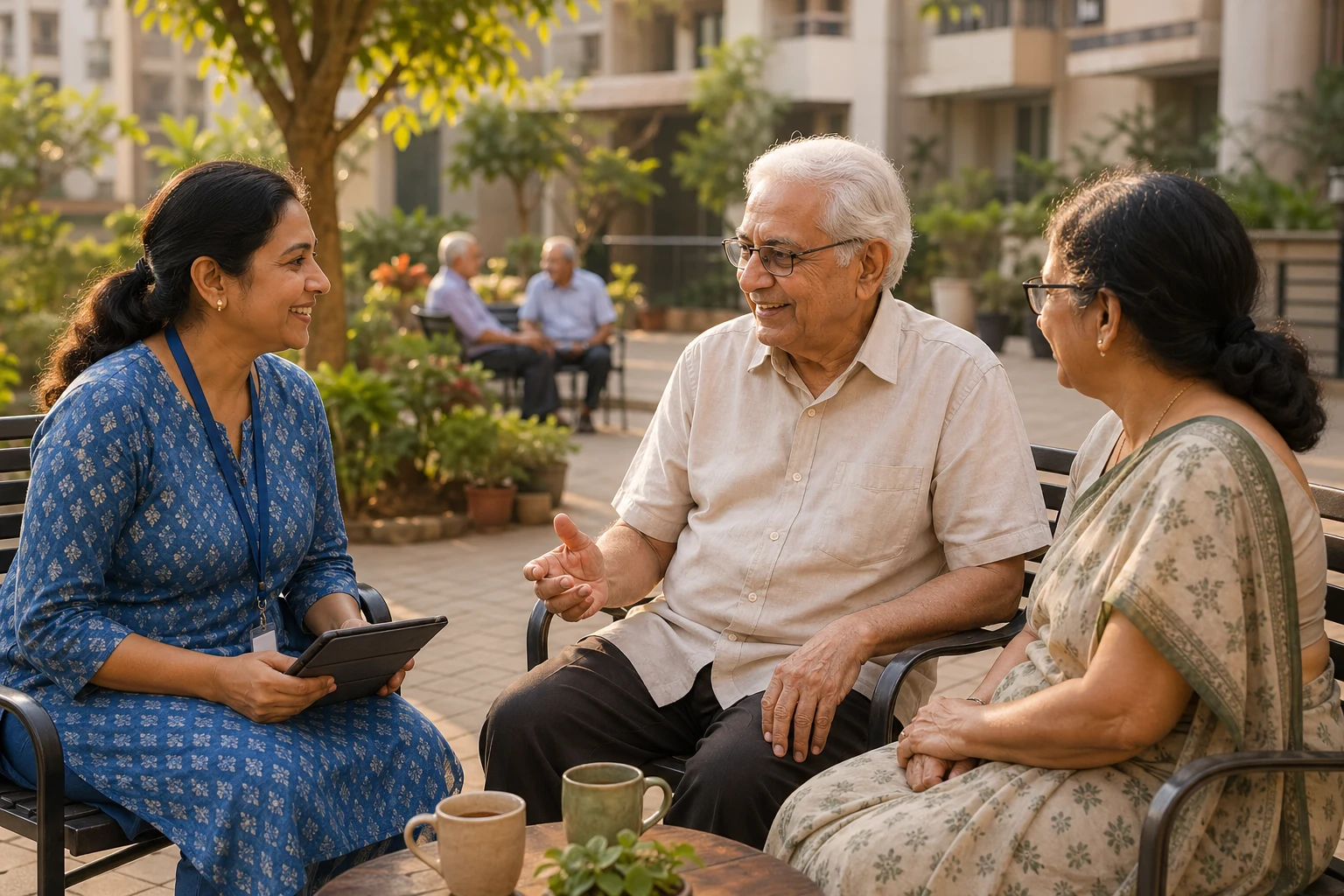
Day-care centers, geriatric clubs, social engagement models, and loneliness screening appear as low-cost ways to protect mental and social health.
Reading list
Guides in community support
Pre-post intervention evidence in Rural Puducherry elderly focused on health education and preventive literacy and tracked misconception change. Education-based prevention is weaker evidence than RCTs, but still relevant for community programming.
Intervention study evidence in Elderly adults in India focused on mindfulness program and tracked depression, stress, and cortisol. Promising psychosocial prevention direction, though scale and rigor details still need closer review.
Cross-sectional evidence in India elderly population focused on access and uptake behavior as prevention systems issue and tracked determinants of care-seeking. Useful for understanding why screening and chronic-care pathways fail to convert into real care continuity.
Cross-sectional systems assessment evidence in Odisha and related India health-system settings focused on program preparedness for nphce implementation and tracked health-system gaps. Strong health-system applicability even though it is indirect prevention evidence rather than a trial.
This review maps why preventive oral care still fails older adults in India and argues that service pathways and caregiver support matter as much as clinical knowledge.
Intervention design / pilot evidence in Rural India older adults focused on community plus facility screening package and tracked feasibility and implementation outcomes. Directly aligned with NPHCE and HWC-style delivery, even though the evidence is still early-stage.
Cross-sectional analysis evidence in India elderly population focused on loneliness linked to adverse behaviors and tracked predictors and program implications. Strengthens the case for psychosocial prevention and social-connectedness interventions.
Cross-sectional analysis evidence in India elderly population focused on loneliness as a psychosocial prevention target and tracked prevalence by state and correlates. Targets psychosocial prevention and supports screening prioritization.
Cross-sectional evidence in India residential care elders focused on vision and hearing screening as mental-health prevention and tracked depression associations. Links sensory screening to depression prevention and supports integrated risk detection.
This program-focused review explains how geriatric prevention is supposed to be delivered across PHC, CHC, district, and tertiary levels under NPHCE. It is included less as outcome evidence and more as the implementation backbone for the rest of the shortlist.
This study validates the UCLA-8 loneliness scale for rural older adults in Tamil Nadu and argues for use within primary care and NPHCE pathways. It gives the portal a concrete psychosocial screening tool rather than just a generic recommendation.
A PHC-linked geriatric club combined discussion, social activity, and structured engagement and reported better depression and MMSE scores after six months. It is one of the report's clearest low-cost primary-care-adjacent models.
This comparative study suggests structured day-care attendance may support better mental health and quality-of-life outcomes in rural older adults. It gives the report a real-world community model beyond clinic-based interventions.
This follow-on occupational-therapy trial reported improvements across function, mood, cognition, and quality of life. It is one of the clearer examples in the report of a non-drug intervention with multiple patient-centered outcomes.
This trial reported quality-of-life gains when occupational therapy was added to standard treatment. The report treats it as a pragmatic non-pharmacologic way to reduce functional decline and caregiver strain.
This block-randomized trial in old-age homes found that yoga can improve sleep and quality of life, strengthening the case for low-cost behavioral programming in residential elder care.
This pilot explored whether yoga could work as a fall-prevention strategy in Hyderabad. It is useful less for definitive effect size and more for showing the intervention is acceptable and plausible in the Indian setting.
This trial showed that educating caregivers can improve oral-hygiene outcomes in institutionalized elders, making oral care a concrete preventive workflow rather than an afterthought.
This institutional randomized trial used a structured multimodal package and reported improvements in depression, self-esteem, and quality of life over follow-up.
This Goa-based randomized trial evaluated a task-shared prevention model for late-life depression and showed why lay-counselor delivery is a credible preventive option for older adults in primary care-linked settings.
This randomized trial tested a home-based, mobile-guided breathing and meditation package for older hypertensive adults and reported larger improvements in blood pressure and sleep quality than standard care.